


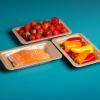

Granted by BNL BNP Paribas, the financing supports a structured industrial transformation programme involving logistics, production and packaging
Packaging is one of the main pillars of Sibeg Coca‑Cola’s new sustainable development plan, supported by a €15 million financing granted by BNL BNP Paribas. The transaction backs an industrial transformation path aligned with ESG criteria, involving logistics, production and, increasingly, decisions related to materials and packaging solutions.
The financing is structured as a green loan, with economic conditions linked to the achievement of specific environmental targets. These include the progressive reduction of Scope 1 and Scope 2 CO₂ emissions per litre of beverage produced, in line with Sibeg’s decarbonisation trajectory set with a 2030 horizon.
Within the industrial plan, sustainable packaging plays a key role. Sibeg is introducing new technologies aimed at reducing the use of plastic, alongside advanced carton‑based packaging systems, identified as a concrete lever to increase packaging circularity and reduce environmental impact. The use of carton as a more sustainable alternative fits within a design approach focused on reducing fossil‑based materials and improving compatibility with recycling streams.
The focus on packaging is part of a broader circular economy strategy, which also includes the introduction of a new returnable glass line, scheduled to become operational in 2027. The system will be characterised by high operational flexibility, with a production capacity ranging from 10,000 to 14,000 bottles per hour, enabling the handling of different formats and products. A potential future evolution towards a hybrid line, capable of including can production, is also foreseen.
Alongside investments in packaging, the financing also supports the development of a new automated logistics platform, designed to optimise flows and improve the energy efficiency of the Catania plant.
Sibeg’s ESG plan additionally includes the purchase of 2,000 new high‑energy‑efficiency refrigerators and a series of measures aimed at reducing water consumption. In line with the roadmap defined in 2025, these actions are expected to lead to an overall reduction in water use of 34%.


