


Tetra Pak and Sterilgarda Alimenti have introduced the first-ever 1-litre package featuring a paper-based barrier, marking a new and important milestone in the carton packaging industry’s transition towards low-carbon, renewable materials.
More paper, less CO₂
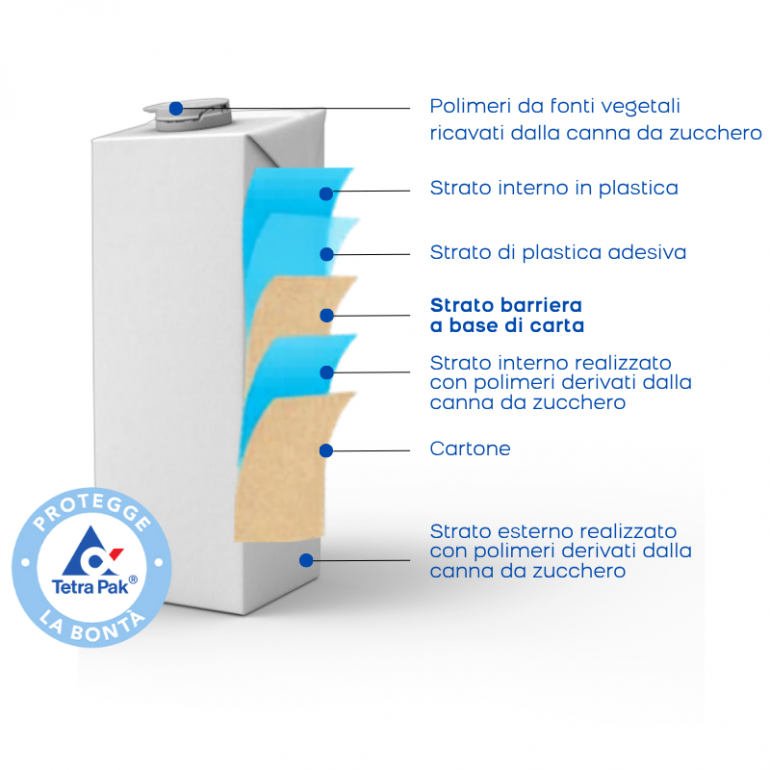
Introducing a paper-based barrier into the Tetra Brik® Aseptic 1000 Edge carton package, one of the company’s most widely used formats with its distinctive slanted top panel, increases the renewable content to 90% when combined with plant-based polymers. The paper-based barrier simplifies the carton structure, reducing it from three to two main materials: paper and polymers. The increased cellulose content can support recycling infrastructure by improving material recovery and quality, while maintaining the strength and rigidity required to protect aseptic products throughout their lifecycle. Designed for ambient distribution, the carton ensures shelf life and performance comparable to traditional aseptic packaging with an aluminium barrier, while reducing the carbon footprint by up to 50%, as verified by Carbon Trust.
€100 million investment through to 2030
This industry-first innovation follows another major step forward by Tetra Pak in the development of next-generation sustainable packaging materials: a €60 million investment in a new pilot plant for paper-based barrier technology at the company’s facility in Lund, Sweden.
Tetra Pak’s aseptic beverage carton with a paper-based barrier was first launched in 2023 in a portion pack format on flexible production lines. The technology was later expanded to high-speed lines and, in 2024, it was recognised as a breakthrough sustainability innovation, receiving the “Resource Efficiency” award at the Sustainable Packaging News Awards 2024.
To further improve the environmental profile of beverage and food cartons, Tetra Pak is committed to investing approximately €100 million annually through to 2030 in the development of sustainable packaging solutions. The plan includes the creation of cartons with simplified material structures and a higher share of renewable-based materials.


