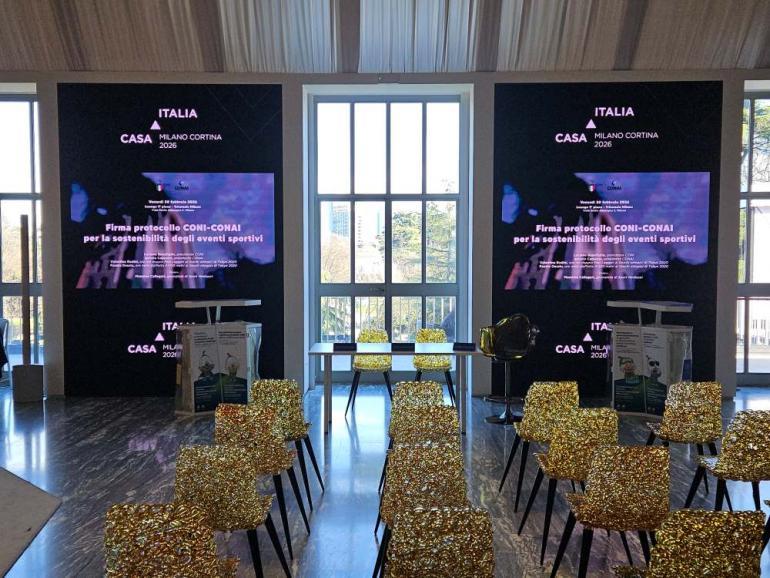



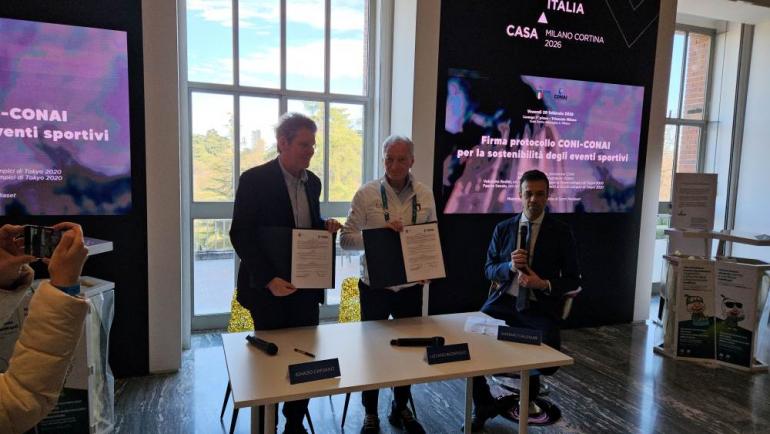
At Casa Italia, the urban headquarters of the Olimpiadi Milano Cortina, sustainability, the circular economy, and recycling were discussed on the occasion of the signing of the agreement between CONI and Conai for the development of a management protocol for major sporting events which, in terms of sustainability, can make a real difference.
This is the view of CONI president Luciano Buonfiglio, who emphasized how sport and its participants represent a natural environment for good practices and education, especially for younger generations.
According to CONAI president Ignazio Capuano, “The protocol represents the formalization of a synergy between successful projects: that of Olympic sport and that of the circular economy represented by the CONAI system. The recycling bins distributed in the Olympic villages and competition venues are not only the first step of a project that will see us in partnership through Los Angeles 2028, but also an opportunity to present an Italian path to sustainability to spectators and athletes from countries where waste collection systems are not as developed as in Italy.”
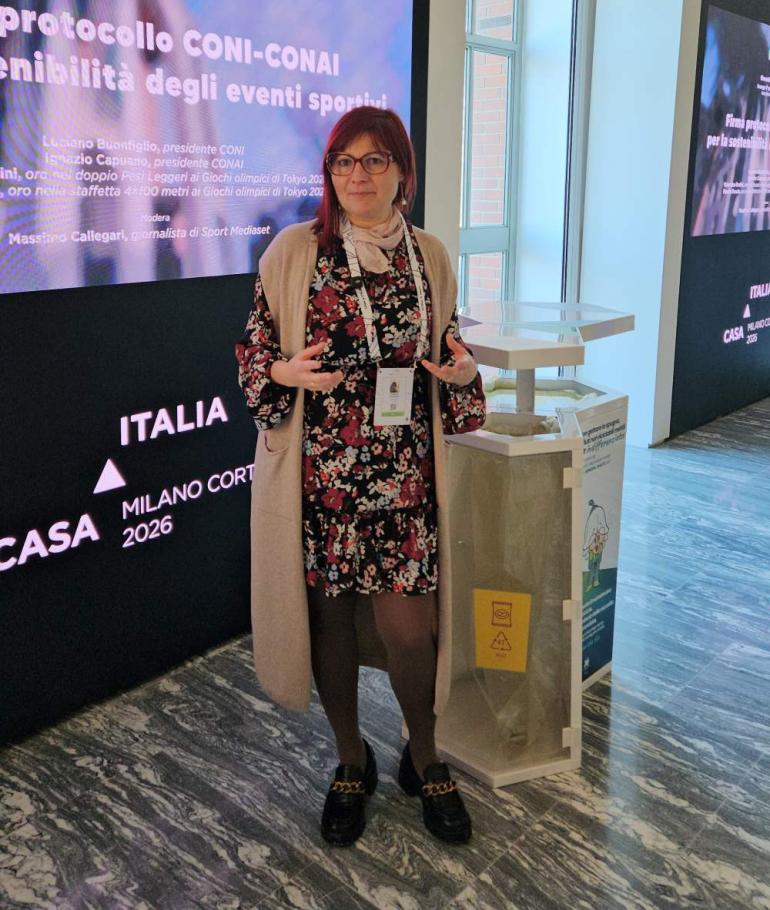
Simona Fontana, Director General of CONAI, emphasized that “The protocol arises from the awareness of how much more can be done for the circular economy precisely by acting on sporting events which, due to their scale in terms of audiences and consumption, can truly make a difference. While we are very good at separating waste at home, we are less effective at events, both because of the lack of adequate infrastructure and because awareness needs to be strengthened. With this protocol we have formed an alliance, because the environment and sport share the idea that a team spirit is necessary to reach the goal.”
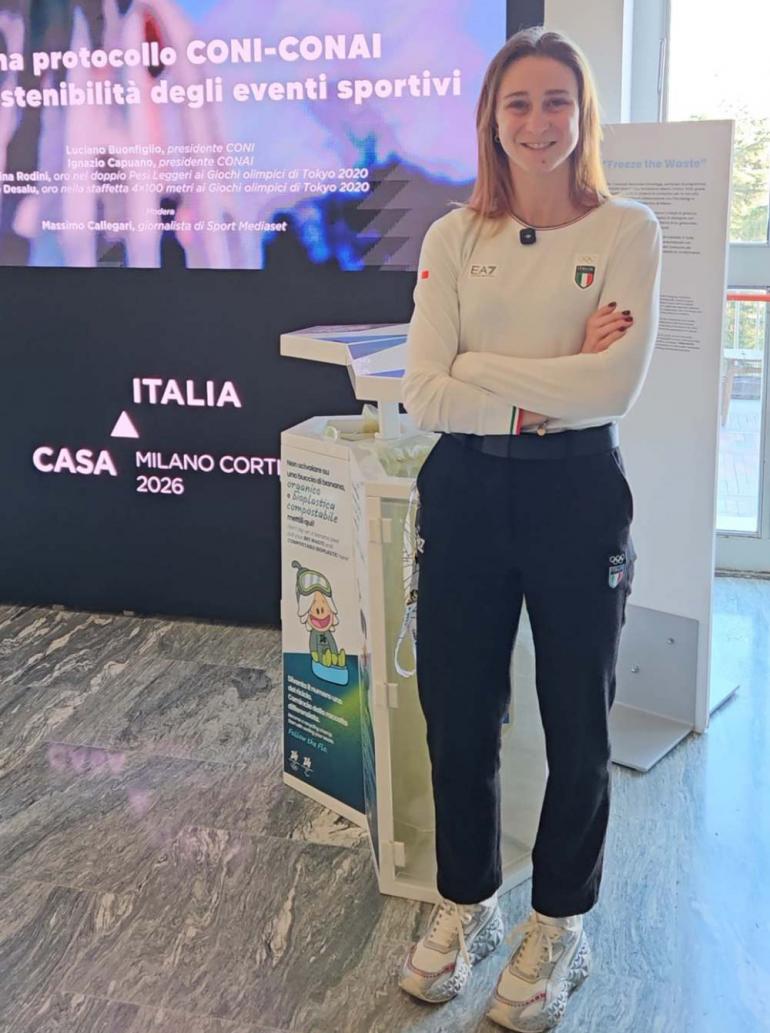
In an Olympic setting, the presence of an athlete could not be missing -representing a sport that makes effective resource and environmental management two of its strengths. The floor therefore went to Valentina Rodini, Olympic gold medalist at Tokyo 2020 in rowing, a federation already very active on sustainability issues.
“The FIC has already launched sustainability pathways with the Memorial D’Aloja, through which it inaugurated a green project that includes cleaning the rivers and riverbeds where we train every day, without forgetting awareness initiatives for younger generations. As in rowing - and as athletes know - it is daily commitment that makes the difference; because even if results are not immediately visible, it makes it possible to achieve high-level outcomes in the long term. A concept that unites sport and sustainability.”